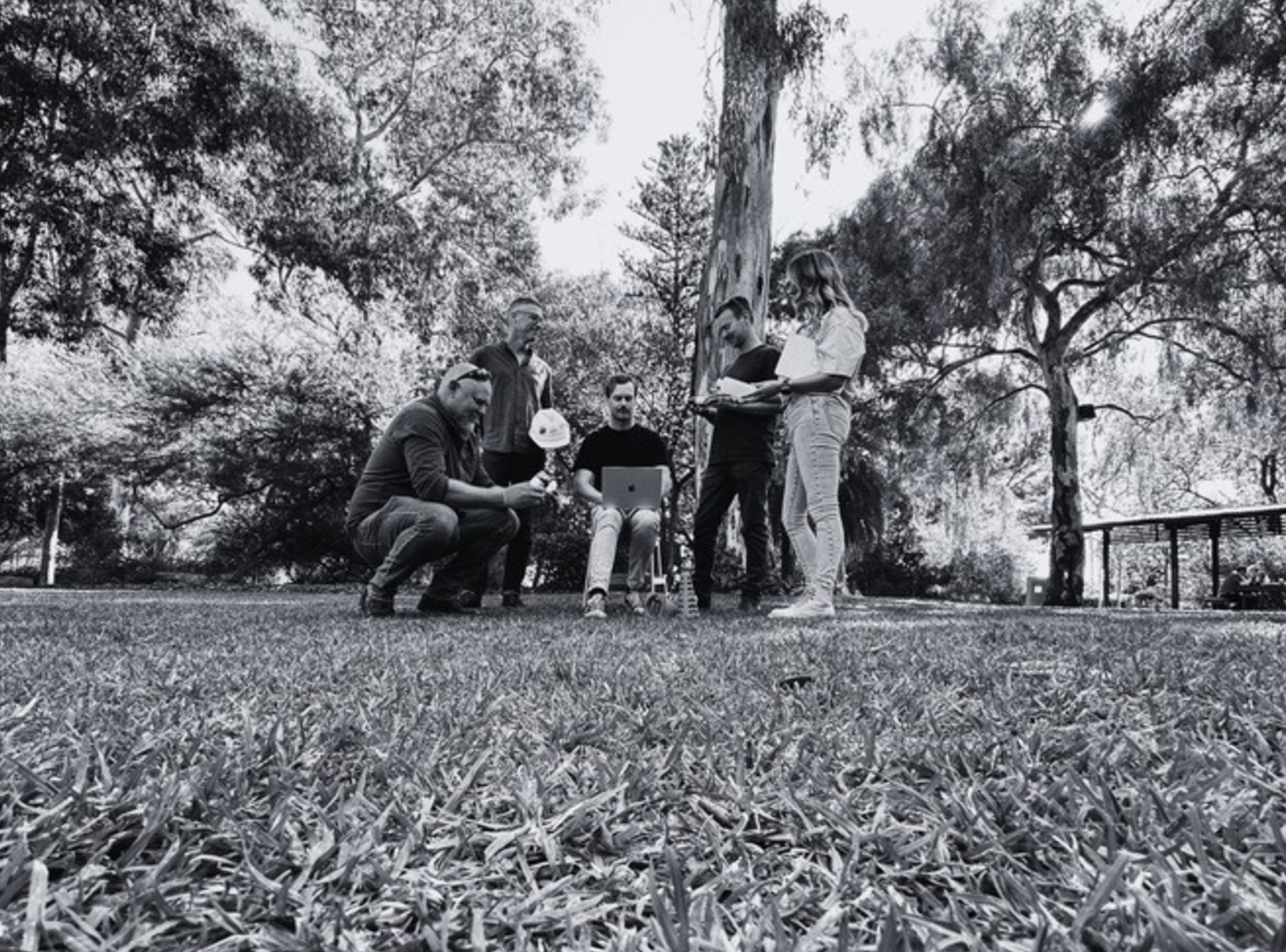

As a certified Site Contamination Auditor in South Australia under the Environment Protection Act 1993, I see firsthand how asbestos continues to shape site contamination audits, project costs, timelines, and long-term land use decisions.
The issue isn’t whether asbestos exists. The issue is how we deal with it.
How We Got Here: Australia’s Long History with Asbestos
Australia was one of the highest per capita users of asbestos in the world.
From the 1940s through to the late 1980s, asbestos was widely mined, imported, manufactured, and installed in residential and commercial construction. During the housing booms of the 1960s and 70s, asbestos-containing materials (ACMs) were everywhere — roofing, fencing, eaves, wall sheeting, insulation, vinyl flooring, backing boards, pipe lagging and more.
Companies like James Hardie became synonymous with Australian construction. Asbestos cement sheeting was affordable, durable, fire-resistant and easy to install. It was seen as a solution — not a liability.
Compared to other developed nations, Australia’s mining and use persisted longer and at greater intensity. While many countries reduced use earlier, asbestos products remained embedded in Australian housing stock well into the 1980s.
That legacy remains.
One in Three Homes: Why Development Sites Are Still Affected
When 1 in 3 homes contains asbestos, redevelopment naturally disturbs it.
Across infill subdivisions, knock-down rebuilds, brownfield conversions, and former light industrial land, asbestos contamination in soil is common. Not always because contractors are careless. Not because there is insufficient guidance available. But generally because historical construction practices embedded asbestos into the built environment at scale.
Common pathways we see in audits include:
- Demolition debris buried onsite decades ago
- Historical landfills (known and unknown)
- Fill imported prior to regulation
- Poor demolition controls in early redevelopment phases
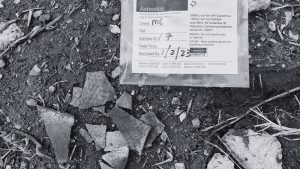
- Fragmented asbestos cement sheeting dispersed through soil
In greenfield sites, legacy dumping and uncontrolled fill can also present surprises.
For developers, asbestos in soil isn’t just a technical issue. It’s a commercial one.
Why Soil Contamination Changes the Game
Asbestos in bonded building materials presents a manageable risk when intact. Asbestos fragments dispersed in soil are different.
Once ACM becomes fragmented or friable in soil:
- It creates airborne fibre risks
- It triggers regulatory controls
- It impacts classification of fill and waste
- It requires assessment under ASC NEPM
- It may trigger audit requirements
- It affects land use suitability
Assessment and remediation become more complex. Treatment options may include:
- Excavation and offsite disposal
- Onsite containment
- Validation and clearance testing
- Capping systems
- Long-term management plans
Each option carries cost, time and regulatory implications.
The earlier asbestos risk is understood, the more options remain available.
Why Is Asbestos So Widespread Across Australia?
South Australia, New South Wales, Victoria and Western Australia have all faced widespread asbestos soil contamination issues.
Several factors contribute:
- Historic demolition practices that buried debris onsite
- Council landfills with mixed waste
- Inconsistent early regulation
- Imported uncontrolled fill
- Urban infill pressures
- Poor supervision during early civil works
Western Australia responded with the development of detailed Guidelines for the Assessment, Remediation and Management of Asbestos-Contaminated Sites. These WA Guidelines have since been widely adopted across Australia as practical national guidance.
Today, assessment and remediation rely on two key frameworks:
- ASC NEPM (Assessment of Site Contamination National Environment Protection Measure)
- WA Asbestos Guidelines
Together, they guide investigation density, risk assessment methodology, clearance criteria and remediation standards.
For developers, this means asbestos is no longer a grey area. It is a defined regulatory pathway. But it requires proper execution.
The Auditor’s Perspective: Five Critical Questions Developers Ask
1. Why do we still see widespread asbestos across demolition sites if it has been “removed”?
Because removal certificates relate to building structures — not soil validation.
Licensed asbestos removalists remove identified ACM from buildings. But fragmented debris often remains in surrounding soil. Demolition disturbance can break bonded sheets into smaller fragments. If early-stage site stripping and earthworks are not carefully managed, ACM disperses.
Removal is not the same as site clearance.
2. What about oversight during early civil works?
Early demolition and bulk earthworks are high-risk phases.
Without environmental oversight:
- Fragments are mixed into fill
- ACM spreads across larger areas
- Excavated material becomes reclassified
- Validation becomes more complex
Early implementation of Construction and Demolition Management Plans (CDMPs) reduces this risk significantly.
Education of civil contractors is critical. Awareness at the dozer blade matters.
3. What’s the real cost difference?
Upfront management costs are almost always lower than post-contamination remediation.
Early-stage controls may include:
- Targeted site investigation
- Supervised demolition
- Controlled stripping
- Segregation of suspect materials
If contamination spreads, costs escalate:
- Broader excavation
- Waste classification
- Increased disposal fees
- Extended audit requirements
- Delays to titles or planning approvals
Reactive remediation is almost always more expensive than proactive management.
4. How does asbestos affect project timeframes?
Time delays typically arise from:
- Unexpected findings during earthworks
- Regulatory notification requirements
- Additional sampling rounds
- Waste transport approvals
- Re-design of remediation strategy
- Audit condition negotiations
For tier-1 developers operating across multiple stages, even small delays compound across programs.
Predictability is currency.
5. Can education and oversight reduce risk?
Yes.
Clear guidance, contractor education, environmental supervision and early-stage planning reduce:
- Spread of friable material
- Reclassification of fill
- Audit complexity
- Ongoing management burdens
They also reduce future liabilities for councils, body corporates and landowners.
Sites with unmanaged residual asbestos often carry long-term management conditions. That impacts strata developments, future renovations, and public perception.
Avoidance is better than perpetual management.
Council Landfills and Mixed Legacy Sites
Some of the most complex projects involve:
- Former council landfills
- Mixed industrial waste sites
- Uncontrolled dumping areas
- Chemical substances co-mingled with asbestos
Risk communication becomes challenging. Communities hear “asbestos” and assume worst-case scenarios. Developers must manage both technical risk and public perception.
Clear conceptual site models, transparent communication and defensible remediation strategies are essential.
From an auditor’s perspective, risk is not eliminated through optimism. It is managed through evidence.
Australia’s Commitment to Addressing Asbestos in Soil
Australia banned asbestos in 2003. Since then, regulatory focus has shifted to managing legacy contamination.
National and state regulators have:
- Strengthened ASC NEPM
- Adopted consistent guidance
- Increased landfill controls in particular practices around the reuse of waste such as waste derived fill (WDF)
- Promoted safer demolition practices
- Encouraged better waste tracking
The commitment is clear: legacy asbestos will be addressed through structured assessment, defensible remediation and long-term land management where necessary.
But regulation alone is not enough.
Industry behaviour must align.

At the Forefront of Reducing Future Risk
The most effective strategies today include:
- Early site investigations before demolition
- Targeted soil sampling around structures
- Clear demolition protocols
- Segregation of suspect materials
- Environmental supervision during bulk earthworks
- Transparent reporting to auditors and regulators
For developers converting land into residential mixed-use precincts, asbestos management is not just compliance. It is part of project governance.
Strong early decisions reduce:
- Remediation costs
- Audit conditions
- Ongoing management plans
- Reputational risk
Why This Matters for Residential Developers
Large-scale developments operate on tight margins and tighter timelines. In fact, redevelopment of land at any scale where asbestos contamination exists is likely to present a risk to any project.
When asbestos contamination is:
- Identified late
- Poorly managed
- Spread during works
The impacts multiply.
Conversely, when asbestos risk is:
- Identified early
- Contained effectively
- Managed transparently
Residential development projects proceed with confidence.
From an auditor’s perspective, the best sites are not the ones without contamination. They are the ones where contamination was anticipated, controlled and addressed methodically.
Clarity Moves Projects Forward
Asbestos is part of Australia’s built history. It is also part of its redevelopment future.
The question is not whether it will appear. The question is how it will be managed.
Developers who invest in early planning, strong demolition controls and clear audit pathways:
- Reduce remediation costs
- Improve time certainty
- Avoid unnecessary site-wide classification
- Limit long-term management burdens
- Protect future residents
The Auditor’s Conclusions
At Mud Environmental, we see asbestos not as a roadblock — but as a risk that can be understood, managed and resolved with the right approach.
Some projects do not fit neatly into a box. That is where clear advice, practical oversight and a robust understanding of the rules make the difference.
Because when asbestos is handled properly, land can move forward safely.
And projects move forward with confidence.
Reach out to the Mud Environmental team for more information about how we can support you with your environmental project.